New for the 2027 NBRC Exam

Prepare Smarter for the New Respiratory Therapy Examination

Review the essential content, practice clinical decision-making, complete full-length readiness exams, and use detailed results to focus where improvement matters most.

$49/month · Cancel anytime

Created by credentialed respiratory therapists and authors of bestselling respiratory therapy review materials.

Practice Question · Clinical Decision

Clinical scenario: An adult patient with COPD in the emergency department has increasing work of breathing, a pH of 7.28, a PaCO2 of 68 mm Hg, and remains awake and cooperative. Which action should the respiratory therapist recommend next?

  • A Initiate noninvasive ventilation Correct answer
  • B Administer a short-acting bronchodilator only
  • C Reduce supplemental oxygen immediately
  • D Continue observation without intervention

Why A

A pH of 7.28 with a PaCO2 of 68 is acute-on-chronic respiratory acidosis. The patient is awake and cooperative, so noninvasive ventilation can reduce work of breathing and improve ventilation without intubation. Reducing oxygen (C) treats a number rather than the patient and risks hypoxemia.

Original illustrative question—not actual NBRC exam content.

19 Video Lessons
530 Practice Questions
Detailed Rationales
Readiness Analytics

Right Course Check

Are You Preparing for the Right Exam?

The NBRC is replacing the TMC and CSE with a single Respiratory Therapy Examination beginning January 2027. A narrow group of candidates can still sit the Clinical Simulation Examination through December 2027. Here's how to tell which one is yours.

Through 2026

TMC Exam CSE Exam

Two separate exams

CSE available through Dec 2027

From Jan 2027

Respiratory Therapy Examination

185 items, 160 scored, 4 hours

New Pathway

New RTE Pathway

Take the RTE if you are graduating or testing in 2027 or later, or if you would rather sit one exam instead of two. It costs $360 versus $390 for the TMC and CSE combined, and it is a single testing appointment. CRT candidates should note the RTE includes a depth-of-clinical-judgment assessment for the first time.

Start Studying
Transition Pathway

TMC, CSE & Specialty Pathway

You can still take the CSE through December 2027, but only if you pass the TMC at the high cut score before December 31, 2026. If that's not your situation, the RTE is your exam. Respiratory Cram also has ACCS and NPS courses for specialty credentials.

View Our Other Courses

Important: Exam eligibility depends on individual circumstances. Confirm your pathway with your respiratory therapy program and the NBRC before enrolling.

Built by Respiratory Therapists, for Respiratory Therapists

Build the Clinical Judgment Tested on the New RTE

The retiring Clinical Simulation Examination tested clinical judgment through branching simulations. The RTE tests it through 60 multiple-choice items built around two skills the NBRC names directly — information gathering and decision making. Decision making carries twice the weight.

Information Gathering · 20 Items

Interpret patient data

Read the ABG, the vital signs, and the bedside findings together, and work out what the patient is actually doing.

Recognize the key finding

Decide which finding drives the answer when several compete — a rising PaCO2, a falling mental status, a silent chest.

Decision Making · 40 Items

Select the right intervention

Choose the therapy that fits this patient now, not the one that fits the diagnosis in general.

Evaluate the response

Read what happened after treatment and decide whether to continue, modify, or stop.

Determine the next step

Know when to hold the current plan and when to escalate — and know the difference before the patient declines.

See These Skills in Action

Practice Question · Clinical Decision

Clinical scenario: An adult patient with COPD in the emergency department has increasing work of breathing, a pH of 7.28, a PaCO2 of 68 mm Hg, and remains awake and cooperative. Which action should the respiratory therapist recommend next?

  • A Initiate noninvasive ventilation Correct answer
  • B Administer a short-acting bronchodilator only
  • C Reduce supplemental oxygen immediately
  • D Continue observation without intervention

Why A

A pH of 7.28 with a PaCO2 of 68 is acute-on-chronic respiratory acidosis. The patient is awake and cooperative, so noninvasive ventilation can reduce work of breathing and improve ventilation without intubation. Reducing oxygen (C) treats a number rather than the patient and risks hypoxemia.

What You Study

Inside the 19 Lessons

One introduction, sixteen task-based lessons with practice questions, and two supplemental deep dives. Every lesson maps to the NBRC content outline.

19 Video Lessons

  • 01 Introduction to the RTE
  • 02 Patient Records & Clinical Assessment Evaluate Data in the Patient Record
  • 03 Bedside Respiratory Assessment Perform Clinical Assessment
  • 04 Diagnostic Procedures & Monitoring Perform Procedures to Gather Clinical Information
  • 05 Interpreting ABGs & Monitoring Results Evaluate Procedure Results
  • 06 Selecting & Recommending Diagnostics Recommend Diagnostic Procedures
  • 07 Equipment Setup & Troubleshooting Troubleshoot Devices During and After Assembling
  • 08 Infection Control, Safety & Quality Assurance Ensure Infection Prevention, Safety, and Quality Assurance

Lesson 01

Introduction to the RTE

How the 2027 Respiratory Therapy Examination is structured — the 100-item breadth portion, the 60-item depth of clinical judgment portion, and how scoring changes from the TMC and Clinical Simulation Examinations.

Video
Start Studying

In Every Lesson

Focused Video Instruction

Every lesson taught by Dr. Tim Gilmore, a respiratory therapy program director — clear explanations without unnecessary filler.

Exam-Style Practice

Apply the module content through board-style multiple-choice questions.

Detailed Rationales

See why the correct answer is right and why the alternatives fall short.

Readiness Exams

Test Full-Length, Then See Exactly Where You Stand

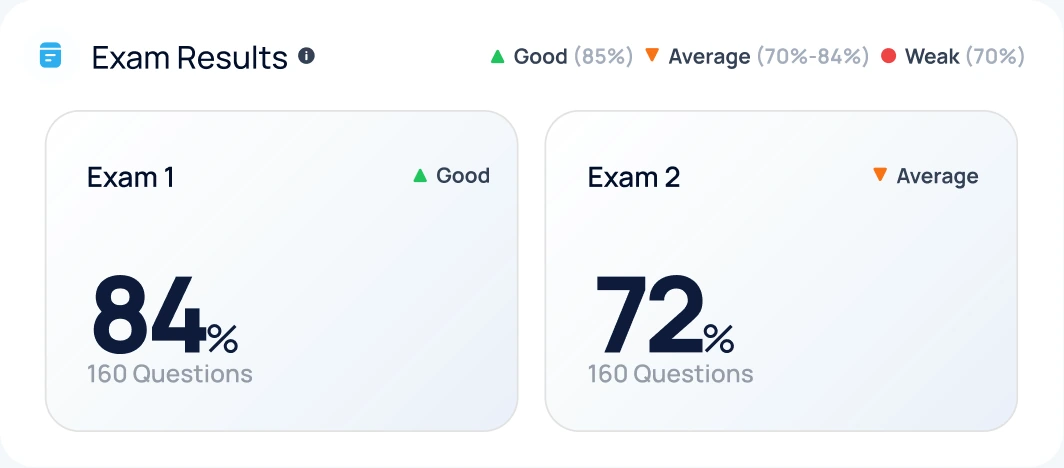
Two full-length readiness exams, 185 questions each — the same number of questions you'll answer on the RTE itself. Sit a complete testing session to build pacing and endurance, then let the analytics engine show you exactly what to study next.

Realistic Testing Sessions

A complete 185-question exam in one sitting, not a short question set. The only way to know how you'll hold up across a full four-hour testing session.

Built to the NBRC Blueprint

Each exam mirrors the structure of the real RTE — breadth-of-knowledge items and depth-of-clinical-judgment items in the same proportion — so your practice score reflects the exam you'll actually sit.

Every Answer Feeds Your Analytics

Readiness exams mirror the real testing experience, so there are no rationales to lean on mid-exam. Afterward, every answer flows into your performance analytics — broken down by content area, patient type, clinical judgment, and cognitive level — so you know exactly where to go back and study. Retake as often as you like and compare your performance over time.

A readiness-exam score does not guarantee a passing NBRC result.

Exam results screen showing two readiness exams scored 84% and 72%

Illustrative interface


Turn Results Into Action

Performance Analytics

A total score tells you how you performed. The analytics engine breaks down results so you know exactly what to study next.

Separate Practice From Performance

See learning-mode practice and full-length readiness results tracked independently, so study work doesn't inflate your readiness picture.

Find Weak Content Areas

Performance by content area, plus weak patient groups and prioritized study areas.

See How You're Missing, Not Just What

Results break down by clinical judgment (information gathering vs. decision making), cognitive level (recall, application, analysis), and question type (breadth vs. depth) — the same categories the NBRC uses to report exam results.

Know What to Study Next

A recommended next module based on your own results — rules-based, driven by your performance data, not an AI study coach.

Performance analytics screens showing exam results, learning module performance, weak areas and a recommended next module
Illustrative interface

The analytics engine is live in the course today.

Start Studying

Build the Clinical Judgment Tested on the New RTE

Built by Respiratory Therapists, for Respiratory Therapists

Not a generic test-prep platform repurposed for this credential.

Built specifically for respiratory therapy board preparation

Every video lesson taught by a respiratory therapy program director

Respiratory-only since 2014 — trusted TMC, CSE, ACCS, and NPS exam prep

Every lesson mapped to a specific NBRC task or patient type

Damon Wiseley

Damon Wiseley

RRT, CPFT, B.H.Sc.

Founder, Respiratory Cram · Practicing Respiratory Therapist


Damon Wiseley has practiced as a Registered Respiratory Therapist since 1998 and still works at the bedside today. He published his first respiratory therapy review book in 2014 and has since written six, every one an Amazon bestseller in the category. He founded Respiratory Cram to bring that same teaching online and has built exam-preparation courses for the TMC, CSE, ACCS, and NPS credentials — the RTE course is the fifth. He holds a B.H.Sc. from Nova Southeastern University.

Dr. Tim Gilmore

Dr. Tim Gilmore

PhD, RRT, RRT-NPS, RRT-ACCS, CPFT, AE-C

Course Instructor · Department Chair & Program Director


Dr. Gilmore teaches the video lessons throughout this course. He is a university Clinical Associate Professor, Department Chair, and Program Director, with extensive experience educating and preparing respiratory therapy students for professional practice and NBRC credentialing examinations. He holds specialty credentials in both neonatal-pediatric (RRT-NPS) and adult critical care (RRT-ACCS) — the two areas the course's depth-of-clinical-judgment lessons cover. He earned his PhD in Health Science from Nova Southeastern University.

Membership & Pricing

Your RTE Prep Membership

One subscription, the whole system — 19 video lessons, 530 total questions, two full-length readiness exams, and analytics that show you what to study next.

RTE Exam Prep

$49 /month

  • 19 video lessons taught by Tim Gilmore, PhD, RRT
  • Two full-length 185-question readiness exams that simulate the RTE
  • Access on desktop, tablet, and mobile
  • Results broken down by clinical judgment and cognitive level
  • 160 lesson practice questions with detailed rationales
  • Unlimited retakes on practice questions and readiness exams
  • Every lesson mapped to the NBRC exam matrix
  • All 530 questions feed your performance analytics
  • A recommended next lesson based on your own results
  • Full access to future course updates
  • Cancel anytime

FAQ

Questions About the RTE Course

Yes. The course prepares eligible candidates for the new Respiratory Therapy Examination, which the NBRC introduces in January 2027.

Prepare for the RTE With a Clearer Study Process

Review the content, practice clinical decisions, complete full-length readiness exams, and use your results to focus your remaining study time.